Why does my sliding flyscreen door keep coming off its track?
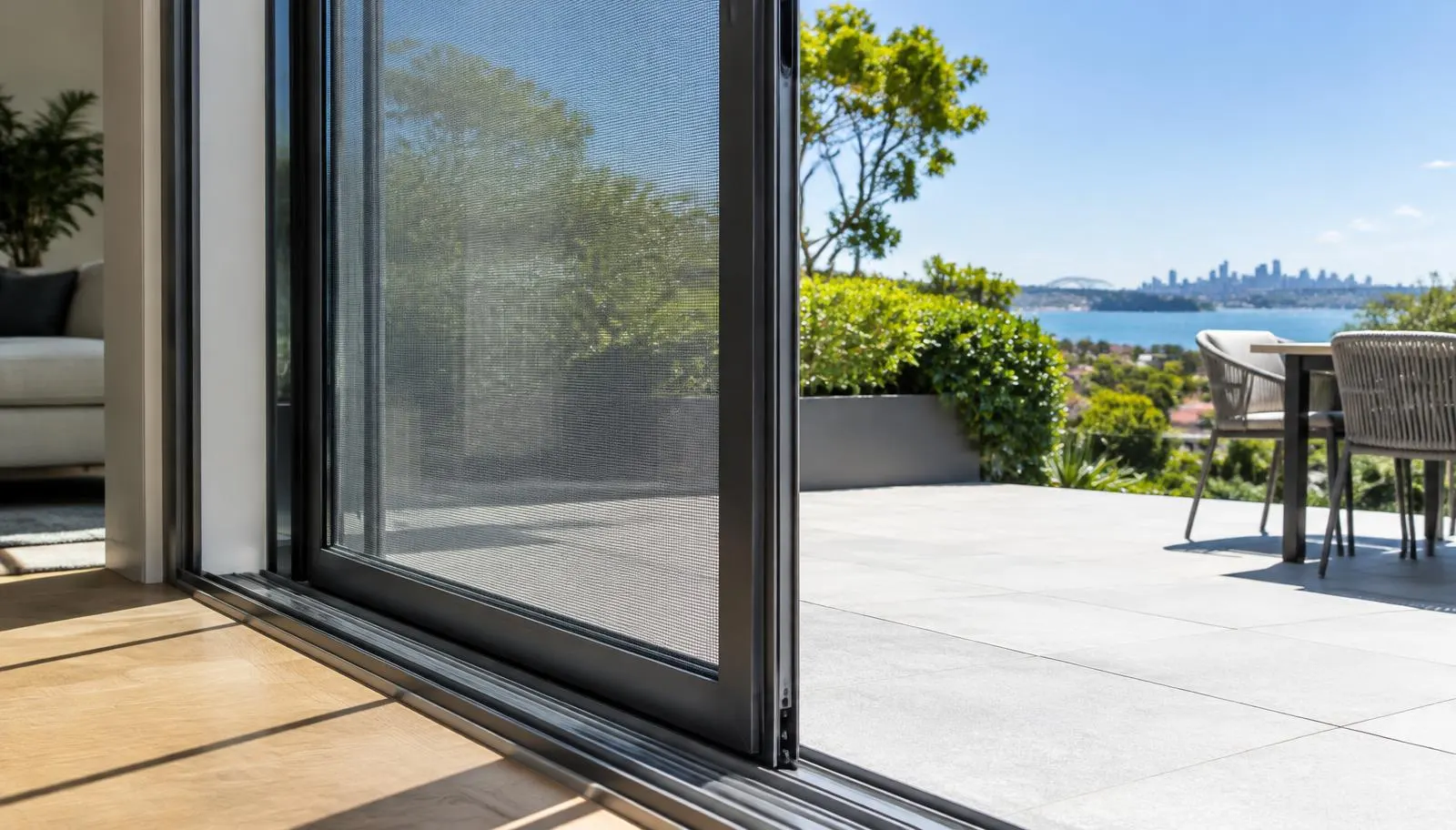
A sliding flyscreen door that repeatedly comes off its track needs more than another push back into position. The repair should start with checking roller condition, door alignment and how the upper track holds the panel. Manufacturer guidance treats roller adjustment and correctly matched hardware as essential to getting a screen door running properly.
This is a specific concern for Sydney households: a September 2026 homeowner request in Chipping Norton described a sliding flyscreen that did not sit properly on its track and kept falling off. That is evidence of a real local repair need, not a measure of search volume.
Before assuming you need a new door, work through the checks below. Keep DIY checks to an upright, stable panel; leave removal and damaged hardware to a repairer if you are unsure.
What makes a sliding flyscreen door come off its track?
Worn or damaged rollers
The small wheels and their housings need inspection, not just adjustment. Rolltrak advises replacing bent or broken screen-door rollers and matching the existing carriage and wheel dimensions to the correct part. A damaged wheel cannot be made sound by simply turning its adjustment screw.
Incorrect height or upper guidance
On screen systems with adjustable top and bottom rollers, the bottom adjustment squares the door to the closing channel. The upper adjustment controls up-and-down movement. Seconline explains that its top rollers also locate the panel centrally in the upper track. An incorrectly adjusted panel therefore warrants an alignment check, rather than repeated rehanging.
Debris or track damage
Dirt, pet hair and grit deserve attention before any hardware adjustments. Statesman Windows recommends regular vacuuming of the bottom track to prevent build-up and associated roller wear. Cowdroy also advises checking the track for both cleanliness and damage during roller repairs. Cleaning is useful maintenance, but it is not a remedy for damaged metalwork.
Alignment problems at the latch
If closing or locking the screen requires lifting it, ask for the running alignment to be checked before treating it as a lock-only fault. Cowdroy notes that roller adjustment may be necessary for correct latching and locking. The relationship between wheels, track and latch matters; inspecting only the lock can miss part of the problem.
What can you safely check yourself?
Start with observation and accessible cleaning. Do not deliberately rock or lift the panel to see whether it will fall out.
- Stop if the panel is unstable. Keep people away from a leaning or partly detached door and arrange help rather than continuing to operate it.
- Vacuum the accessible bottom track. Use a soft brush to loosen debris without taking the panel out. Regular track vacuuming is manufacturer-recommended maintenance.
- Look along the runner. Photograph visible dents, worn areas or loose sections for the repairer. Track condition is part of a proper roller assessment.
- Observe the closing edge. If the door remains securely seated, move it gently towards the closed position. Note whether it meets the closing channel evenly or needs lifting to latch. Correct adjustment should address squareness and locking operation.
- Record when it derails. Tell the repairer whether it happens during opening, at one location or when locking. Take photos only if you can do so without recreating an unsafe movement.
Do not reach for lubricant automatically. Maintenance instructions differ: Statesman advises against lubricating its door tracks, while Rolltrak describes a cleaning product in its own roller-repair procedure. Follow the instructions for your particular door rather than assuming one spray suits every system.
Should you adjust the rollers yourself?
Only consider adjustment if the panel is stable, you can positively identify the adjustment screws and you have the instructions for that hardware. Do not assume that every visible screw adjusts a wheel.
Manufacturer fitting guidance recommends checking movement frequently during adjustment. Winding the rollers too far can put excessive pressure on them and cause damage. Stop if the adjustment binds, makes operation worse or fails to keep the panel correctly aligned.
For DIY purposes, avoid removing the panel simply to investigate. Rolltrak's removal procedure explicitly calls for another person to help lift the door. Rehanging also requires correct alignment and subsequent roller adjustment; getting the panel back into the opening is not the whole repair.
When should you call a repairer?
Arrange an assessment if the door derails again after accessible cleaning, a wheel looks broken, the track is visibly damaged, or the door cannot close without lifting. These are reasons to inspect the running hardware and alignment rather than keep forcing the panel along.
When booking, describe it as a sliding flyscreen door, not simply a sliding door. Send a full-door photo, a close-up of any visible damage and any brand label. Ask the repairer to check the complete running system and latch alignment.
For property managers, request photos and a description from the occupant rather than asking them to remove the screen. Include access arrangements and ask for the proposed repair scope before authorising work.
Can it be repaired, or does the whole door need replacing?
A roller fault does not automatically justify a new door. Rolltrak specifically identifies new rollers as a possible alternative to replacing the entire screen door. The important qualification is finding hardware that matches the existing assembly.
Ask for an assessment of whether the existing frame, track and hardware can provide reliable operation after repair. If the frame is badly distorted, the track cannot be made serviceable or suitable parts cannot be sourced, ask the repairer to explain the limitation before spending money on a partial fix.
Windor Repairs repairs existing windows and doors only. Repair work can involve renewing worn components, but the business does not supply or install replacement door units. If a whole new door is needed, that falls outside its service.
What does flyscreen door repair cost in Sydney?
Windor Repairs' relevant listed prices are GST inclusive:
- Flyscreens: $330.
- Sliding door rollers: $385.
- Sliding door track: $605.
- Locks: $330.
- Other repairs: from $330.
These are service categories, not a combined quote for an off-track flyscreen door. Ask which category applies to your particular screen and what the quoted work includes. Do not assume the flyscreen price covers every combination of wheel, track and latch repairs.
Frequently asked questions
Can I just put the flyscreen door back on its track?
Rehanging alone does not address broken rollers or incorrect adjustment. If the door repeatedly derails, have the cause checked. Panel removal and refitting also require help with lifting under Rolltrak's guidance.
Why does the screen door lift when I lock it?
Running alignment may be contributing. Roller adjustment can affect latch operation, so request an alignment check before authorising lock work alone. Avoid forcing the handle to pull the door into position.
Does Windor Repairs install new flyscreen doors?
No. Windor Repairs specialises in repairing existing windows and doors, not new door installations or whole-unit replacements.
Get help with an off-track flyscreen door
Windor Repairs is a family-owned, licensed and insured repair specialist serving Sydney and the Central Coast. For help assessing your existing sliding flyscreen door, contact Windor Repairs or call 0431 698 250. There is no call-out fee, and repair workmanship is backed by a 3-year warranty.
Need Professional Repair Service?
Don't wait for small problems to become big issues. Contact Windor Repairs today.